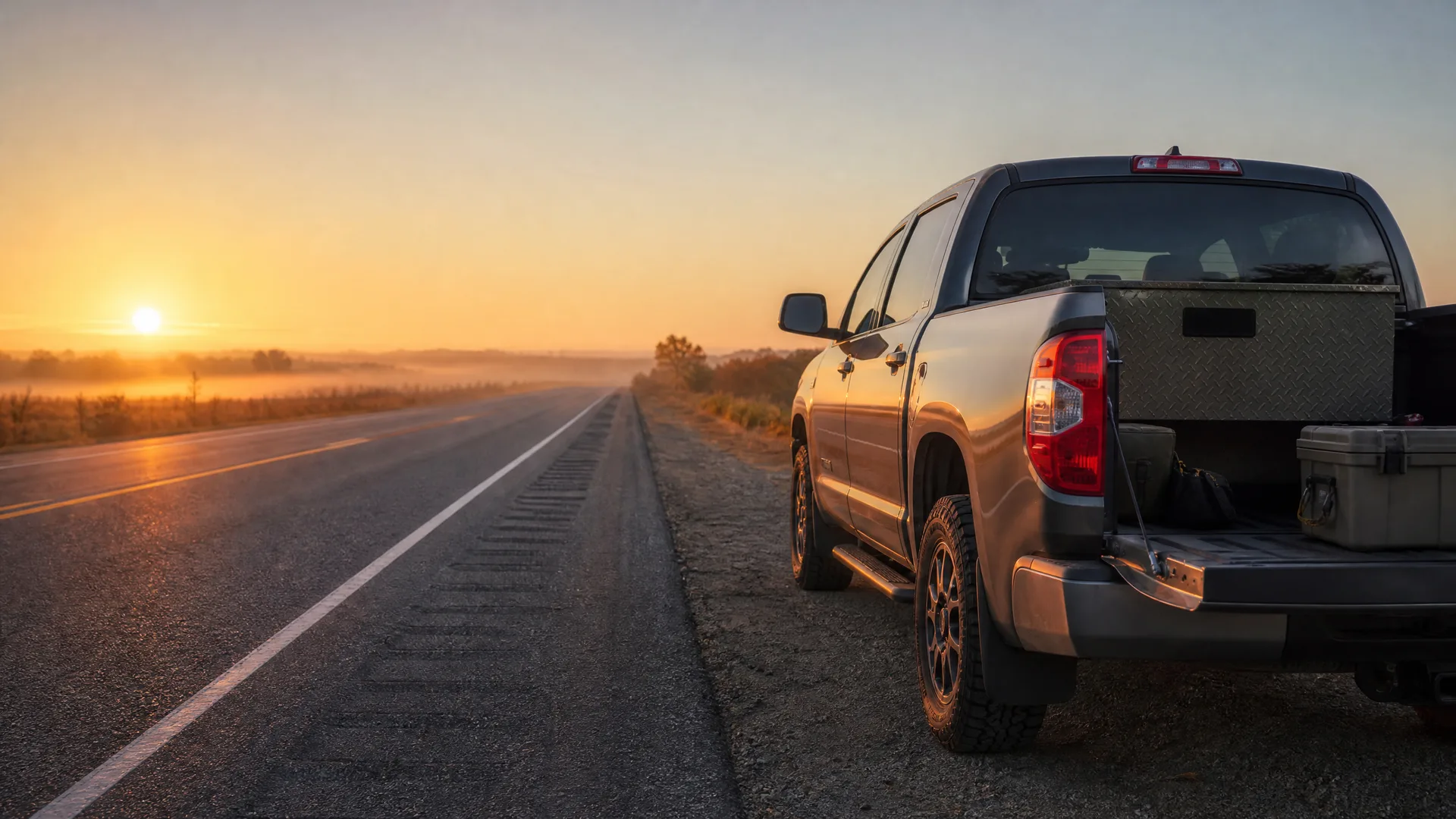
Insuring Cars in Two Different States
Free to compare
The Multi-State Household Policy Problem
You own a car garaged at your primary residence in one state and a second vehicle garaged at a work address, vacation property, or college campus in another state. Your current carrier just informed you that both vehicles cannot sit on the same policy. The multi-car discount you expected does not apply because the vehicles are not garaged in the same state.
This is not a carrier preference or an underwriting quirk. State insurance regulations require carriers to price policies by the garaging address—the location where the vehicle is parked overnight most of the year. A vehicle garaged in Florida carries different liability minimums, uninsured motorist requirements, and rating factors than a vehicle garaged in Georgia. One policy cannot simultaneously comply with two states' regulatory frameworks. The structural consequence: you need two separate policies, one for each state, and the multi-car discount disappears.
“One policy cannot simultaneously comply with two states' liability minimums, registration rules, and rating regulations.”

Put Every Car on One Better Policy
Get My Multi-Car Insurance Quote36 jurisdictions
States Using SR-22 Filing
Most states regulate insurance by garaging address and require separate policies when vehicles are registered in different jurisdictions. A handful of states allow limited exceptions for military families or students, but the default rule holds: one policy per state.
Why Garaging Address Controls Policy Structure
Carriers price auto insurance by the risk profile of the garaging location. A vehicle parked in Miami faces different theft rates, weather exposure, traffic density, and uninsured motorist prevalence than a vehicle parked in rural Montana. State minimum liability limits vary: some states require $25,000 per person bodily injury coverage, others require $50,000. No-fault states mandate personal injury protection; tort states do not.
When you register a vehicle in a state, that state's Department of Motor Vehicles expects proof of insurance meeting that state's minimum requirements. The policy must be issued in that state, rated for that garaging address, and compliant with that state's regulatory framework. A Florida policy cannot cover a Georgia-garaged vehicle because the Florida policy does not meet Georgia's registration and proof-of-insurance rules.
The multi-car discount applies only to vehicles on the same policy. If your household needs two policies—one for each state—the discount does not bridge across them. Each policy stands alone, priced independently, with no cross-policy discount recognition.

The blocker: carriers cannot write one policy that simultaneously complies with two states' liability minimums, registration rules, and rating regulations.




State-Specific Liability Minimums and Coverage Gaps
Each state sets its own minimum liability limits. When you hold two policies in two states, you must meet each state's minimums independently. A policy that satisfies one state's requirements does not automatically satisfy the other's. For example, a state requiring $50,000 per person bodily injury and a state requiring $25,000 per person create two different liability floors. You cannot average them or carry one policy at the higher limit to cover both vehicles.
Uninsured motorist coverage rules also vary. Some states mandate uninsured motorist coverage at the same limits as your liability coverage. Others make it optional. A few states require underinsured motorist coverage as well. When you structure two policies, each must comply with its own state's uninsured and underinsured motorist rules. This often means buying coverage you would skip if both vehicles were in the same state.
Personal injury protection requirements split along no-fault and tort lines. No-fault states require PIP coverage; tort states do not. If one vehicle is garaged in a no-fault state and the other in a tort state, one policy carries PIP and the other does not. The premium difference between the two policies reflects this structural gap, not just the garaging-location risk difference.
$15,000–$50,000
State Bodily Injury Minimums Per Person
Minimum liability limits vary widely across states. A household with vehicles in two states must meet both minimums independently, which often means carrying higher total liability limits than a single-state household would.

Multi-Policy Discounts and Household Bundling
The multi-car discount is gone, but some carriers offer a multi-policy discount when you hold two auto policies with them. This discount is smaller than the multi-car discount—typically a few percentage points off each policy rather than the 10–25% range multi-car discounts occupy—but it reduces the total cost compared to using two unrelated carriers. Not every carrier offers this discount, and the discount structure varies by carrier and state.
Bundling both auto policies with a homeowners or renters policy can recover some of the lost savings. Many carriers offer a bundle discount when you combine auto and home coverage, and holding two auto policies plus a home policy often qualifies for a larger bundle discount than holding one auto policy and one home policy. The bundle discount applies per policy, so two auto policies may generate two separate bundle discounts if the carrier structures it that way.
Compare Carriers That Write Both States
Start by identifying carriers licensed in both states. Use the comparison tool to filter carriers by state and coverage type. Enter the garaging address for each vehicle separately—do not use your primary residence address for both. The tool will return quotes for each state independently, allowing you to compare total household cost across carriers that write both policies.
When comparing quotes, look at the total annual premium for both policies combined, not just the per-policy cost. A carrier with a slightly higher premium in one state but a lower premium in the other may deliver a lower total cost than a carrier with mid-range premiums in both states. Factor in any multi-policy or bundle discounts the carrier offers when you hold both policies with them.
How to Structure Coverage Across Two States
Start by identifying which carriers write policies in both states. Not every carrier is licensed in every jurisdiction. A carrier that writes your primary state may not write your second state, forcing you to use two different carriers. When possible, use the same carrier for both policies—many carriers offer a modest multi-policy discount when you hold two auto policies with them, even if the vehicles are in different states. This is not the same as a multi-car discount, but it reduces the total premium compared to using two unrelated carriers.
Next, verify the garaging address for each vehicle. The garaging address is not the registration address or the owner's mailing address—it is the physical location where the vehicle is parked overnight most nights of the year. If you own a vacation property in one state and your primary residence in another, the vacation-property vehicle must be garaged at that property's address, not your primary address. Misrepresenting the garaging address to keep both vehicles on one policy is material misrepresentation and will void coverage at claim time.
Get Your Free Quote
Get My Multi-Car Insurance QuoteFrequently Asked Questions
Can I use one auto insurance policy for cars in two different states?
No. Carriers price policies by garaging address, and each state has different liability minimums, registration rules, and rating regulations. You need two separate policies, one for each state where a vehicle is garaged.
Do I lose the multi-car discount if my vehicles are in different states?
Yes. The multi-car discount applies only to vehicles on the same policy. Vehicles garaged in different states require separate policies, so the discount does not apply. Some carriers offer a smaller multi-policy discount when you hold two auto policies with them.
What counts as the garaging address for insurance purposes?
The garaging address is the physical location where the vehicle is parked overnight most nights of the year. It is not the registration address or the owner's mailing address. Misrepresenting the garaging address voids coverage at claim time.
Can I use the same carrier for both states?
Only if the carrier is licensed in both states. Not every carrier writes policies in every jurisdiction. When possible, use the same carrier for both policies to qualify for any multi-policy discounts they offer.
How do state minimum liability limits affect two-state households?
Each policy must meet its own state's minimum liability limits independently. A state requiring $50,000 per person and a state requiring $25,000 per person create two different floors. You cannot average them or carry one policy at the higher limit to cover both vehicles.
What happens if I register both cars in one state but garage one in another?
Registering a vehicle in a state where it is not garaged is registration fraud and insurance misrepresentation. The policy will be voided at claim time, and the state may suspend your registration and license.